RealGM Analysis
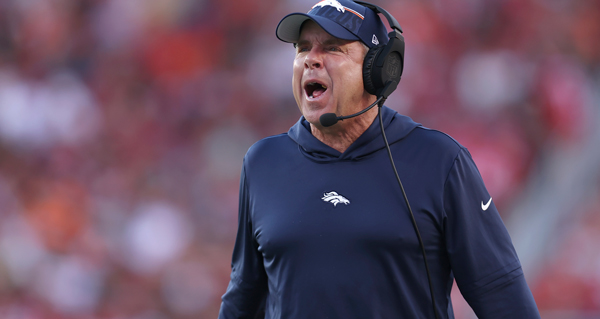
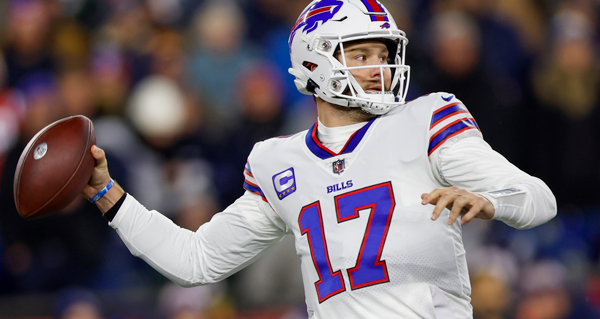
$.01--The NFL’s weekend kicked off with a great game and, of course, an officiating controversy. The same issues that plagued the NFL during the regular season arose in a marquee matchup between the Denver Broncos and Buffalo Bills.
Denver won the game in overtime, 33-30, though the game ended in a way that leaves Bills fans angrily aghast. An iffy defensive pass interference call on CB Tre’Davious White set up the Broncos in position to kick the game-winning field goal. Yet that wasn’t the most controversial officiating decision in the game.
On Buffalo’s first drive of overtime, after Denver’s offense quickly stalled out, Josh Allen dropped back and unleashed a deep seam shot to wideout Brandin Cooks. It appeared Cooks made the catch, but as Cooks hit the ground and Broncos CB Ja’Quan McMillan crashed on top of him, McMillan came up with the ball. It was ruled an interception on the field and that call was upheld. That set up what would become the game-winning drive for Denver.
For the record, I think the officials got the call correct by the way what a “catch” is officiated these days. The process of the catch was not completed while surviving going to the ground and maintaining control by the offense, and the defense did complete the process of the catch thereafter without the ball ever hitting the ground. By the same token, had the call on the field been a Buffalo catch and the receiver down by contact, it would be hard to argue that is the wrong call as well.
It’s precisely that subjectively variable application of poorly defined rules that creates these ongoing, growing issues for the NFL. Now that the league is inextricably entwined with the legalized gambling world, it’s natural to harbor serious skepticism about the influence of impropriety and outside interests with a valid way to impact an outcome. We all seem to be anxiously waiting to discover the NFL version of Tim Donaghy--a dark shadow the NBA still can’t escape decades later.
Bills coach Sean McDermott was spot-on in his post-game press conference in questioning the process of the call.
"It’s hard for me to, and I’ve had a chance to look, it’s hard for me to understand why it was ruled the way it was ruled. If it is ruled that way, then why wasn’t it slowed down just to make sure that we have this right? That would have made a lot of sense to me to make sure that we have this thing right because that’s a pivotal play in the game. We have the ball at the 20 [-yard line], maybe kicking a game-winning field goal right there, so I’ll just leave it that. I’m saying it because I’m standing up for Buffalo, dammit. I’m standing up for us. What went on, that is not how it should go down in my estimation. These guys spend three hours out there playing football, pouring their guts out to not even say, ‘Hey, let’s just slow this thing down.’ That’s why I’m bothered.”
That’s a perfectly valid point by McDermott. For many, the only answer to the questions he raised is that the NFL had an interest in putting a thumb on the outcome scale. And it’s getting harder by the week for the NFL to keep dodging these growing questions.
That I just spent an entire section talking about officiating instead of what was a great football game, that I’m not even bringing up (other than in passing here) Josh Allen’s bad game, Bo Nix winning the game with a season-ending ankle injury, or anything else about what the players did instead of focusing on the officials is quite telling of where the NFL is heading.
$.02--Saturday night wasn’t much of a fight in Seattle and carried no controversy other than the need for a running clock in a blowout. The top-seeded Seahawks put the visiting San Francisco 49ers to bed early with a 41-6 domination that was one of the most lopsided postseason games in memory.
The Seahawks literally dominated from the opening kickoff. Rashid Shaheed fielded the kick and returned it 95 yards up the right sideline for a touchdown. Seattle was ahead 7-0 before the first offensive snap.
It never really got better for the banged-up 49ers. The war of attrition finally caught up to Kyle Shanahan’s team, which had admirably maintained a championship-caliber play despite losing several key players throughout the year. In watching the first half, it was pretty evident that the only position on the field where San Francisco had an advantage was at quarterback, and that slight edge of Brock Purdy over Sam Darnold went away with Darnold playing sharply.
The whole Seattle team played that way. They looked like the best team in the league with the No. 1 defense and a potent, balanced offensive attack. A fourth-down sack of Purdy on the opening drive of the second half quelled any thought of a comeback. Kenneth Walker scored a touchdown to push the lead to 27-6. Purdy made his first real mistake of the game, a late throw behind his target that LB Earnest Jones picked off on the Niners’ next drive.
That was enough for me. I threw in the viewing towel and called it a night. I missed two more Walker touchdown runs. 49ers fans probably wished they went to bed early, too.
$.03--John Harbaugh didn’t have to wait long to find his next gig. Less than a week after being fired by the Baltimore Ravens, where he was the head coach for 18 seasons, Harbaugh moved up the East Coast to New Jersey. He is now the head coach of the New York Giants.
It’s fitting that Harbaugh is the first head coach hired in this spin around the coaching carousel. His 43 wins in the last four seasons despite myriad injuries and personnel changes proves Harbaugh can flat-out coach. This season’s 8-9 anomaly--just Harbaugh’s third losing season in those 18 years in Baltimore--felt much more like a relationship running out of steam than a bad coaching job or a bad football team. Much like longtime rival Mike Tomlin in Pittsburgh, it was simply time for both parties to move on.
Harbaugh should be exactly what the doctor ordered for the ailing Giants. New York has been a bad football organization for 15 years now; since winning the Super Bowl after the 2011 season, Big Blue has posted just three winning seasons and one playoff win. Where Harbaugh can really help New York is in giving them something else, aside from wins, that the Giants have lacked: identity.
The Harbaugh Ravens had a defined identity. They were physical and athletic, smart and swaggering, (mostly) well-conceived rosters of players who Harbaugh knew could play together well. When looking at draft prospects, it was easy to say “he looks like a Raven”.
That has not been the Giants, who do have some promising young talent that might be something special. Brian Daboll couldn’t build an identity or culture despite being an Xs and Os savant. Harbaugh’s specialty is the culture. There’s a difference between telling players they must believe and getting those players to believe. That’s where John Harbaugh wins. That’s not a concept Daboll, or other recent Giants coaches Pat Shurmur or Ben McAdoo or Joe Judge, understood.
$.04-- After the Giants hired John Harbaugh, the Atlanta Falcons took a couple of days to be the next coaching domino to fall. The Falcons hired former Cleveland Browns head coach Kevin Stefanski on Saturday after a mutual courtship.
Stefanski is a very intriguing reclamation project of a coach. Just two seasons ago, Stefanski won his second Coach of the Year award for guiding a Joe Flacco-led Browns team to the postseason. He captured his first coaching honor by getting the Browns to the playoffs in 2020, just their second postseason appearance since rejoining the league in 1999.
Sounds awesome, right? Those are some serious coaching accomplishments. It’s the other four years in Cleveland that provide some risk with Stefanski.
I’ll start by making this very clear: the dysfunction above Stefanski in Cleveland is impossibly irresponsible to ignore. It goes above GM Andrew Berry, who somehow stayed with the Browns too. Having said that…
I covered those teams, and I never felt like Stefanski was doing a particularly good job. Offense is Stefanski’s specialty, but the Browns defense was their better half. Young offensive players didn’t develop, notably along the line or at wide receiver. Stefanski, through some fault of his own, cycled through assistant coaches like a McDonald’s continually churning through high school kids to man the drive-thru window.
His mismanagement and treatment of an obviously injured Baker Mayfield rubbed many the wrong way, myself included. Mayfield is just as responsible for their incompatible relationship, but a good coach could have made that work. Stefanski didn’t do that, and it led directly to the Deshaun Watson fiasco. Stefanski’s version of the Shanahan/Kubiak offense didn’t really fit his personnel the last couple of seasons, and it appears he did very little to adjust to the players he had. Again--it’s not all on Stefanski, but he’s certainly not blameless in the Browns’ failures.
In Atlanta, Stefanski gets his shot at vindication. It’s a Falcons team that has underachieved with defensive-oriented Raheem Morris as the head coach. Atlanta has a good offensive line, one of the NFL’s better sets of offensive skill position talents, and Michael Penix showing inconsistent promise at quarterback. It’s not dissimilar from the Browns team he inherited in 2020 and took to the postseason right away. The Falcons are wise to give him the try, but owner Arthur Blank and new team football president Matt Ryan need to understand that Stefanski needs to prove himself quickly.
$.05--The axiom states that defense wins championships, and it may. But offenses win games, or in the case of the Houston Texans, lose them despite a wonderful defensive effort.
Houston’s defense, for the second week in a row, suffocated an opponent despite being on the road. Last week it was Pittsburgh. This week took the Texans to New England, and they did the same thing.
The Texans defense, keyed by superb EDGEs Will Anderson and Danielle Hunter, surrendered just 248 total yards and 13 first downs. Eight different Patriots drives ended in four plays or less with no first downs. The Houston defense registered five sacks and four TFLs in the run game. And yet they still had almost no chance to win.
That’s because the Houston offense had a miserable afternoon in the cold outdoors. Quarterback C.J. Stroud threw four interceptions, all in the first half. The second INT might be the single worst decision I’ve ever seen a quarterback of his caliber make, lobbing a can of corn up for grabs while under heavy pressure instead of throwing the ball away. This is as bad as quarterbacking gets.
New England proved much better at making the Texans offense pay for their sloppy mistakes than the Steelers could a week ago. Drake Maye and the Patriots managed an impressive early TD drive without the benefit of a turnover. A picture-perfect late throw from Maye to Kayshon Boutte over excellent coverage from Derek Stingley Jr. cemented the 28-16 win.
The AFC Championship will see the Patriots visiting the Broncos, turning back the clock to the 2013 and 2015 postseasons. Denver won each of those matchups, but winning this one will require them to overcome a balanced, smartly coached Patriots team and do so with backup QB Jarrett Stidham at the controls.